
If you’ve ever wondered, “How much does a financial advisor cost on Long Island?” you’re not alone. Most people never ask this before they ever schedule a meeting, and it’s a smart question to ask right up front.
The Short Answer: What Advisors Really Charge Here
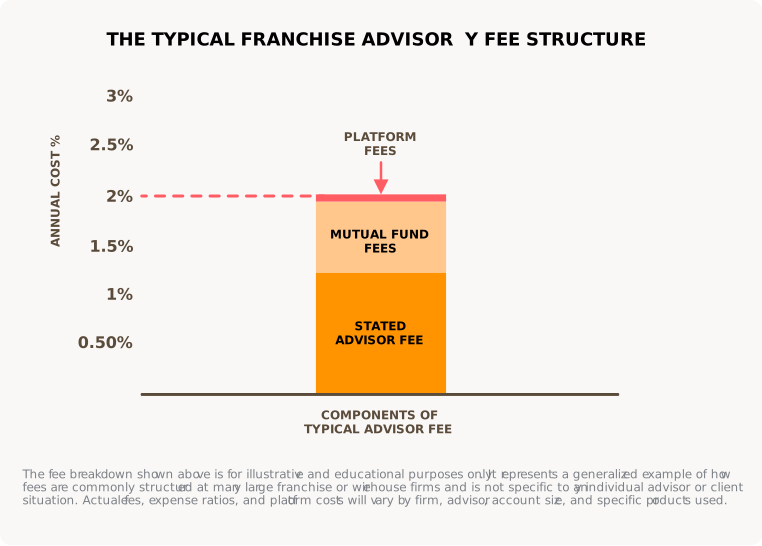
On Long Island, the typical starting point for a traditional financial advisor is around 1% of your investment assets per year. In reality, once you layer in fund expenses, platform fees, and various product fees, the true cost is often higher than that headline number. I talked about high mutual fund fees in my previous post titled: The Hidden Cost of High‑Fee Mutual Funds in Your Portfolio
That 1% might not sound like much, but over a retirement timeline like 20 or 30 years, it can add up to a very real drag on your portfolio, especially if it’s stacked on top of expensive mutual funds or insurance-based products.
How My Fee Structure Is Different
In my practice here in Commack, I charge 0.50% of assets under management, not 1% or more. The goal is simple: keep costs transparent and reasonable, so more of your money stays invested for your retirement instead of getting chipped away by layers of fees year after year.
I also build portfolios using low-cost index funds, not high-expense, complicated products that quietly skim extra basis points from your returns. Lower ongoing investment costs, combined with a lower advisory fee and no hidden fees can create a meaningful difference over time for a Long Island retiree or business owner.
Fiduciary, Independent, and On Your Side
Another key piece: I operate as a fiduciary. That’s just a fancy way of saying I’m legally required to put your interests ahead of mine. No wiggle room, no excuses. I’m not tied to a big corporate parent or an insurance company whispering in my ear about which products to push.
To be honest, I’ve always thought the word “fiduciary” sounded a little strange. Why do we even need a special legal term that basically means “do the right thing”? In a perfect world, everyone would act honestly by default. But we don’t live in that world. The financial industry has its share of hucksters and smooth talkers, and part of my job is to be the opposite of that.
For clients, especially retired police officers, pre-retirees, and small business owners in Suffolk and Nassau, that matters. It means the recommendations you hear across the desk are built around your situation, your risk tolerance, and your retirement goals, not around some company’s sales campaign.
Hidden Costs Usually Creep In
When people tell me, “My advisor only charges 1%,” we usually unpack a few other layers:
In many traditional setups, you might see:
- Higher-cost mutual funds or active strategies with internal expenses on top of the advisor fee
- Insurance products or annuities with embedded fees and surrender charges
- Hidden platform fees that some custodians sneak in, hoping you don’t notice.
Each piece might look small on its own, but together they can bring your real cost well above that 1% headline. When you compare that to a 0.50% fee paired with low-cost index funds, the difference becomes pretty clear.
Why “One-Off” Hourly Advice Often Backfires
Plenty of people try to avoid ongoing fees by paying a financial advisor a one-time or hourly fee for just a meeting or two. On paper, that can sound cheaper, “I’ll just pay for a checkup and do the rest myself.”
In practice, here’s what tends to happen when markets inevitably go down:
Someone who only paid for a one-time plan often feels alone when the market gets rough. The nice, clean binder or PDF they got last year doesn’t feel so reassuring when the headlines turn ugly and their account balances are bouncing around. That’s when emotions take over, and that’s when people usually come back for another “one-off” meeting at a high hourly rate. I’ve seen people pay thousands of dollars for a binder that an AI engine produced, only to be thrown in a desk drawer and never read.
Over a full market cycle, they end up paying more in sporadic hourly advice, and they still don’t have a consistent, long-term strategy or a professional in their corner when they really need one.
A Low Ongoing Fee vs. High Hourly Charges
This is where a low ongoing fee model, like a 0.50% advisory fee, often makes more sense for real-world behavior.
Instead of:
- Paying $500 per hour every time you feel anxious about the market
- Wondering if it’s “worth it” to call before making a big move
- Trying to figure everything out alone between occasional check-ins
You have someone whose job is to be continuously in your corner, studying the market, the economy, and which investments are setting up for potential future problems. You can reach out when markets drop, when you’re thinking about a rollover, when you’re considering retiring a year early, or when you need to decide what to do with a large cash balance.
Why Ongoing Advice Matters More Than Perfect Timing
Most of the damage I see in portfolios doesn’t come from choosing the “wrong” fund, it comes from emotional decisions at the wrong time. Selling after a big drop, piling into whatever did well last year, or freezing in place and doing nothing for a decade can all quietly erode a retirement plan.
For a retired police officer with a pension and deferred comp, or a Long Island business owner with a 401(k) and taxable investments, the key isn’t just picking decent investments. It’s coordinating everything, pension, Social Security, retirement accounts, taxes, and staying on track through good markets and bad.
That’s where an ongoing relationship with a fiduciary advisor can add the most value, and that’s where a lower fee structure helps because it’s actually sustainable over the long haul.
Why This Matters Specifically on Long Island
Living and retiring on Long Island isn’t cheap. Property taxes, everyday living costs, and the desire to stay near family all put pressure on your retirement savings. When everything around you is expensive, paying more than you need to for financial advice doesn’t make a lot of sense.
When Does It Make Sense to Pay an Advisor?
There’s no one-size-fits-all rule, but many people here start looking for a financial advisor when:
- They’ve built up meaningful savings in a 401(k), 403(b), 457, or IRA
- They’ve just retired and don’t know how to manage these accounts
- They don’t know what investments the 401(k) owns or how to allocate them for their risk profile
- They’re rolling over an old employer plan and don’t want to make a costly mistake
- They’re tired of doing it alone and want a second set of eyes they can actually talk to
- They don’t want to trust a family member or a friends advice with their life savings
- They don’t trust most advice on TV or radio due to advertising conflicts of interest
- They have become so confused that they do nothing, but are continually stressed
In those situations, paying a transparent, lower ongoing fee for continuous advice often lines up better with real human behavior than paying a higher one-time fee and hoping emotions never get in the way.
FAQ: Quick Answers About Advisor Costs. Is 1% a fair fee for a financial advisor on Long Island?
Many traditional advisors start at 1%, but once you add fund costs and product fees, the real cost is often higher. A lower fee, like 0.50%, paired with low-cost funds can be more efficient over time. What matters more is honesty. If you meet with an advisor and the meeting feels pushy, or off, trust your gut.
What’s included in an ongoing advisory fee?
Typically, it covers investment management, ongoing monitoring, planning meetings, adjustments as your life changes, and guidance during market volatility. In other words, not just setting up the portfolio, but staying with you as things evolve. But the most important is portfolio management. You are paying to have your funds put in proper long-term investments, and to have a portfolio built correctly for your risk profile.
Is paying hourly cheaper in the long run?
For some very simple situations, it can be. But for most real families and retirees, the need for guidance isn’t a one-time event. People tend to come back in stressful times, and those repeat hourly sessions can add up, without building a true long-term partnership.
Some of the biggest problems I see with individuals paying for hourly advice is that they end up managing their own portfolio, they concentrate positions in speculative stocks or funds, or they listen to a family member or friend give them a hot stock tip that turns out to be a money loser. I’ve seen large account balances get destroyed from one or two poor decisions. A decade of savings can be wiped out in a few months if someone doesn’t understand portfolio management, risk, and interest rates.
If you’re in Commack or anywhere on Long Island, New York, or any other state, and you’re trying to make sense of advisor fees, a useful next step can be to look at your current fee structure and your actual investments side by side. Seeing the full picture in dollars, not just percentages, often makes the decision much clearer.
I offer a free fee comparison checkup, so feel free to email me with any questions.
About the author
Chris Wargas is the founder of First Shelbourne, a Registered Investment Advisory firm based in Commack, New York. He is also a retired police officer, which gives him firsthand perspective on the retirement questions many NYPD, Suffolk County, and Nassau County officers face when evaluating pensions, deferred compensation plans, IRAs, and rollover options.
Disclaimer
The information on this site is for educational and informational purposes only and should not be interpreted as personalized investment, tax, or legal advice. Nothing presented constitutes a recommendation to buy or sell any security, or to implement any specific strategy. Investment decisions should be made based on an individual’s unique financial situation, objectives, and risk tolerance.
All investments involve risk, including the potential loss of principal. Past performance is not indicative of future results. Any references to specific securities, mutual funds, or investment strategies are for illustrative purposes only and may not be suitable for all investors.
The views expressed are those of the author as of the date indicated and may change without notice. While care has been taken to ensure the accuracy of the information provided, no representation or warranty is made as to its completeness or reliability.
Readers should consult with a qualified financial professional and, where appropriate, a tax or legal advisor before making any financial decisions.
Advisory services are offered through First Shelbourne, a Registered Investment Adviser.